About this game
Play Couple Bucket List together
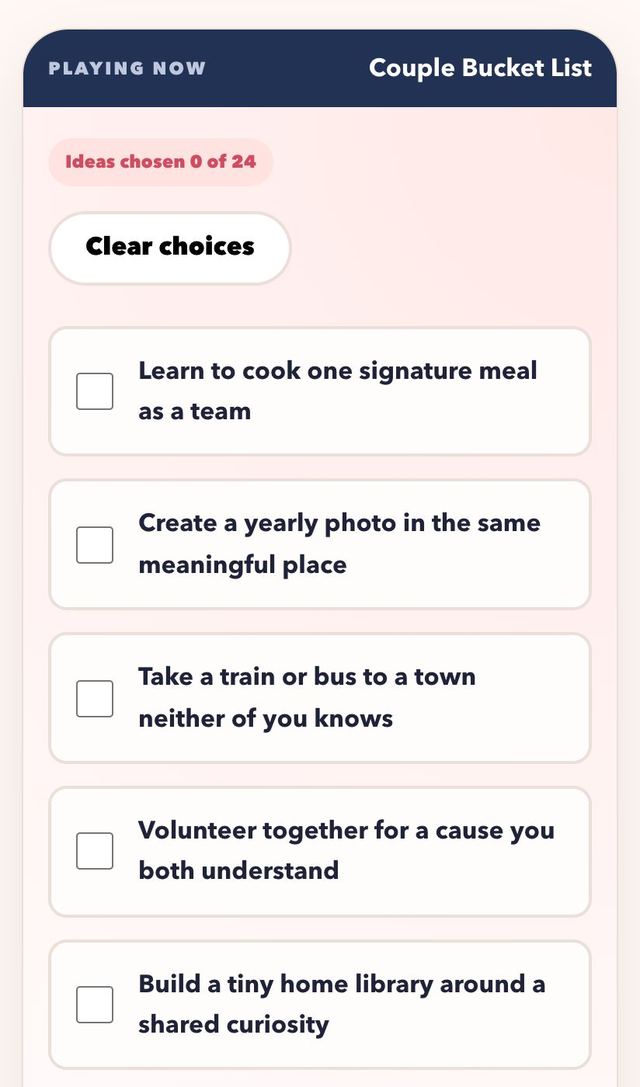
A useful couple bucket list should reflect your values, not copy someone else's highlight reel. These 24 ideas range from small local rituals to longer-term adventures, giving you room to choose what feels meaningful, affordable, and realistic. Checking an item can mean “we want this” or “we did this,” depending on how you use the page. Progress is temporary and local. The conversation about why an idea matters is more valuable than collecting the largest number of checks.
How to play Couple Bucket List
- 01
Read the ideas separately and notice which three create genuine curiosity rather than social pressure.
- 02
Compare choices, discuss the meaning behind them, and adapt any idea to your circumstances.
- 03
Check the items you want to claim for your shared list or mark as completed during this session.
- 04
Choose one small next action for a favorite idea, then reset whenever you want to build a new list.
Why couples like it
- Mixed time scales connect practical near-term plans with larger shared hopes.
- Value-based ideas create better conversation than a list focused only on expensive destinations.
- Choosing together reveals what adventure, home, contribution, and growth mean to each partner.
All 24 couple bucket list ideas
- 01
Learn to cook one signature meal as a team
- 02
Create a yearly photo in the same meaningful place
- 03
Take a train or bus to a town neither of you knows
- 04
Volunteer together for a cause you both understand
- 05
Build a tiny home library around a shared curiosity
- 06
Watch a meteor shower or sunrise from a safe open place
- 07
Host a meal that celebrates people who supported you
- 08
Take a beginner class where both of you can be clumsy
- 09
Make a time capsule for a future ordinary day
- 10
Walk one long local route in several easy stages
- 11
Grow something edible from seed to shared meal
- 12
Record the story of how you met in both voices
- 13
Invent a holiday that belongs only to your relationship
- 14
Visit a landscape unlike the one where you live
- 15
Spend one weekend making rather than buying entertainment
- 16
Learn enough of a new language to share a small conversation
- 17
Support one local artist, maker, or community event together
- 18
Create an emergency comfort plan for difficult weeks
- 19
Swap hometown tours and show each other overlooked places
- 20
Read the same short book and plan a private discussion
- 21
Design a room corner that makes both people feel restored
- 22
Save gradually for one shared experience with a clear budget
- 23
Write letters to open on a future relationship milestone
- 24
Teach another couple or friend a skill you learned together
Ways to use a couple bucket list
- Pick a theme for the year, such as learning, local adventures, or home projects, and choose only from matching ideas.
- Each person secretly picks five favorites, then you compare lists and start with the overlaps.
- Sort the ideas into three groups: this month, this year, and someday, so nothing feels overdue.
- Set a small budget band for each idea and choose items from the band that matches your current month.
How to turn a bucket list into real plans
A list only becomes useful when it meets a calendar. After you choose a few ideas, attach each one to the smallest possible first step: a library visit, a booking, a recipe saved to your phone, or a weekend that is already free. The first step should take less than an hour, and it should be something you can do this week.
Mix sizes on purpose. A few ideas should be doable in an evening, a few in a weekend, and one or two should be long-term goals that need saving or planning. That balance keeps momentum going, because every month still has something finishable on it.
Choosing ideas that fit your relationship
A bucket list is a conversation about values. When you disagree about an idea, ask what each of you is hoping to feel, such as adventure, rest, learning, or closeness, and look for another way to get the same feeling. The goal is not to collect the most impressive items but to build a list that is honest about your time, health, budget, and energy.
Revisit the list every few months. Cross off things that no longer matter, add new ones inspired by recent experiences, and celebrate the ones you did finish. Keeping a copy somewhere you control, such as a notes app or a paper list on the fridge, means progress survives past the time you leave this page.
Make the next round better
- Keep at least half your chosen ideas possible within a day or a modest budget.
- Write selected ideas somewhere you control if you need a permanent list; this page does not save them.
- Remove goals that create obligation or comparison, even if they look impressive online.
Couple Bucket List FAQ
Does the couple bucket list save checked ideas?
No. Checks are temporary browser state. Copy your chosen ideas into a private note or calendar you control if you want to keep them.
What if partners choose different bucket-list goals?
Keep individual dreams individual and look for shared meaning rather than identical choices. One partner can support a goal without needing to own it.
Should a bucket list include expensive travel?
Only when it genuinely fits your finances and values. Small traditions, learning projects, local exploration, and acts of care can be equally meaningful.